
If you have oral surgery coming up, you may be wondering how you’ll get home afterward. This question matters more than you might think. Your safety and the safety of others on the road depend on making the right choice.
Whether you can drive after oral surgery depends mostly on the type of anesthesia you receive. Local numbing injections might allow you to drive home after a few hours, but any form of sedation means you’ll need someone else behind the wheel. Understanding your options helps you prepare properly for procedures at CVOS Oral Surgery, where your safety remains the top priority throughout your surgical experience.
Why You Can’t Drive Home After Most Oral Surgery Procedures
Anesthesia affects your brain’s ability to make quick decisions and coordinate movements, two things you need every second while driving. Even when you feel alert, your reaction time stays slower than normal.
Here’s how different medications impact your driving ability:
- Sedation impairs judgment & motor skills
- General anesthesia affects coordination
- Pain medications cause drowsiness
- Safety concerns for you & other drivers
Research on sedation techniques shows that these medications continue affecting your reflexes long after you feel normal. Professional sedation dentistry protocols emphasize patient safety by requiring alternative transportation arrangements.
Types of Anesthesia & Your Ability to Drive
Local Anesthesia Only
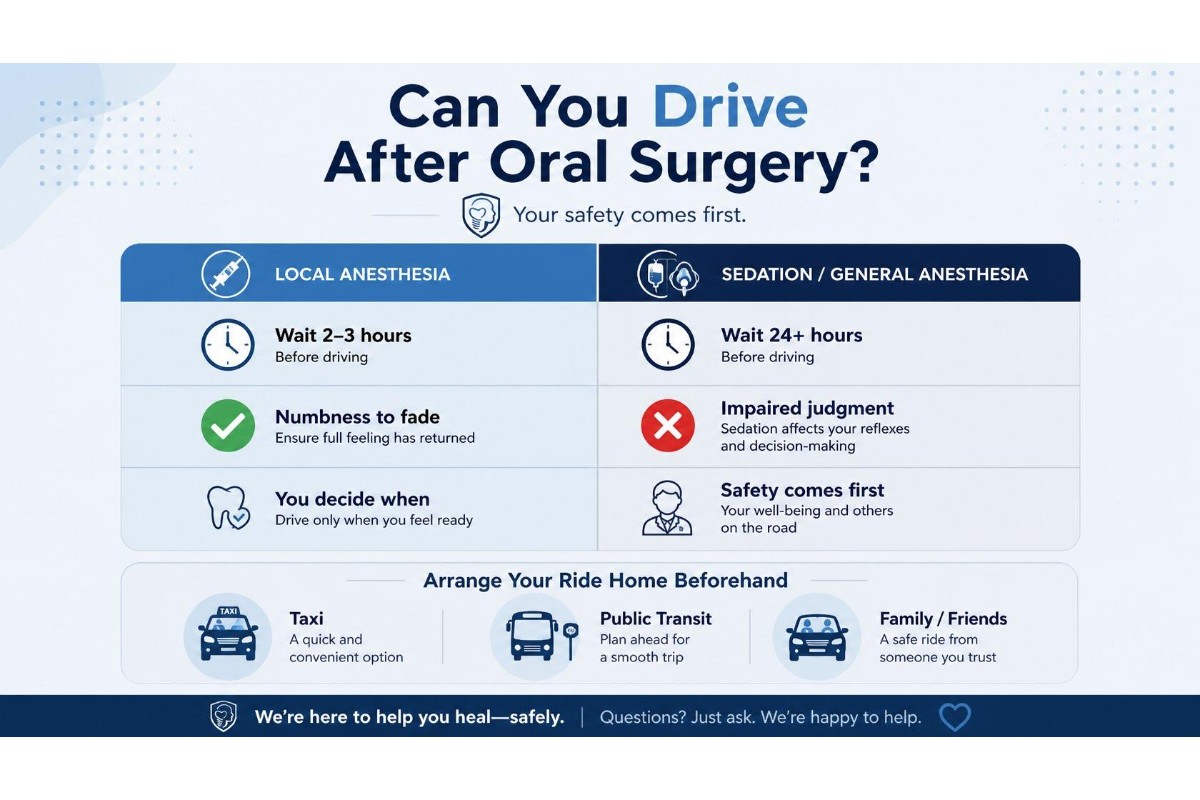
Simple procedures using only numbing injections may give you the option to drive yourself home, but only after the medication wears off completely. Your mouth will feel numb for 2-3 hours, which can affect your ability to swallow normally or speak clearly.
You might be able to drive after procedures like basic extractions, but make sure you feel completely alert and comfortable before getting behind the wheel. Consider having someone available as backup transportation in case you don’t feel ready to drive.
Sedation & General (Deep) Anesthesia
If your procedure involves sedation, you will need someone else to drive you home. The effects can linger much longer than most people realize, and you can’t accurately judge your own impairment level.
Different sedation types affect you for different lengths of time:
- IV sedation effects last several hours
- Nitrous oxide can cause lingering drowsiness
- General anesthesia usually requires a 24-hour driving pause
- Oral sedatives affect reaction time
Cannabis use can affect sedation requirements, making it even more important to arrange transportation ahead of time.
Oral Surgeons vs General Dentists: Who Should Handle Your Surgery
The type of practitioner you see affects both your procedure complexity and your recovery time. Oral surgeons complete four additional years of surgical training after dental school, which means they handle more complex cases that often require stronger anesthesia.
When to See an Oral Surgeon
Oral and maxillofacial surgeons complete several additional years of surgical training after dental school, giving them the expertise to handle procedures that go beyond routine dental care. Their advanced qualifications are especially important when treatment involves sedation or general anesthesia.
An oral surgeon is typically recommended for:
- Complex tooth extractions
- Dental implant placement
- Bone grafting
- Jaw-related procedures
Many patients are referred to an oral surgeon when their treatment requires a higher level of surgical precision or deeper anesthesia than a general dentist provides. Knowing who should handle your procedure helps you plan ahead for recovery and transportation needs.
General Dentist Procedures
Your regular dentist can handle simpler procedures that usually only require local anesthesia. These appointments often allow you to drive yourself home after the numbness fades.
- Simple tooth extractions
- Basic gum procedures
- Minor tissue removal
How Long You Need to Wait Before Driving
Same Day Driving Guidelines
After local anesthesia only, you can potentially drive the same day. Wait until the numbness completely disappears and you feel steady on your feet. Check that you can turn your head normally and react quickly to sudden movements.
- Wait 2-3 hours for numbness to fade
- Check your coordination & alertness
- Consider pain levels & bleeding
24-Hour Wait Period
Sedation and general anesthesia usually require a full day before you should drive. Even if you feel normal after a few hours, the medications continue affecting your reflexes and decision-making abilities.
- Effects can linger longer than you think
- Pain medications add to impairment
- Swelling & discomfort affect concentration
Following your recovery guidelines helps make sure you’re ready to resume normal activities safely. Giving yourself enough time also lowers the chance of avoidable setbacks.
Plan Your Transportation Home & Recovery
Arrange your ride before your appointment day. Your driver might need to wait during your procedure, especially for complex surgeries that can take longer than expected.
Consider these transportation options:
- Family member or friend who can stay during your procedure
- Taxi or rideshare services
- Medical transport services for complex procedures
- Public transit if you only had local anesthesia
Your safety comes first, and planning ahead removes the stress of figuring out transportation when you’re recovering. Proper preparation helps ensure a safe and comfortable trip home.
Plan Your Oral Surgery Referral
If you’re preparing for oral surgery, the team at CVOS Oral Surgery is here to support you before, during, and after your procedure. We’ll help you understand your anesthesia options and provide clear guidance on what to expect for a smooth recovery.
If you’re preparing for a procedure, talk to your dentist or oral healthcare provider about a referral to CVOS Oral Surgery. Our team supports patients through our Mississauga, Oakville, Milton, North Burlington, and South Burlington locations.